A CHESSBOARD IS MORE THAN A BATTLEFIELD. IT IS A WORLD OF IDENTITIES.
Հոկտեմբեր 14 2026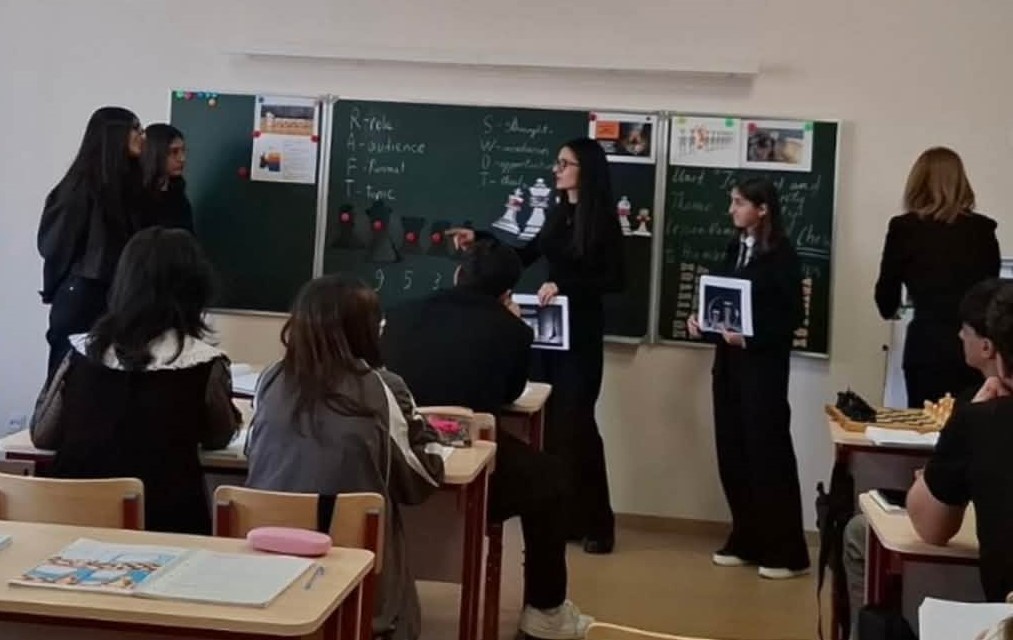
A CHESSBOARD IS MORE THAN A BATTLEFIELD. IT IS A WORLD OF IDENTITIES.
A Creative Lesson Contest
Can a chessboard teach us something about ourselves, our relationships, and the society we live in?
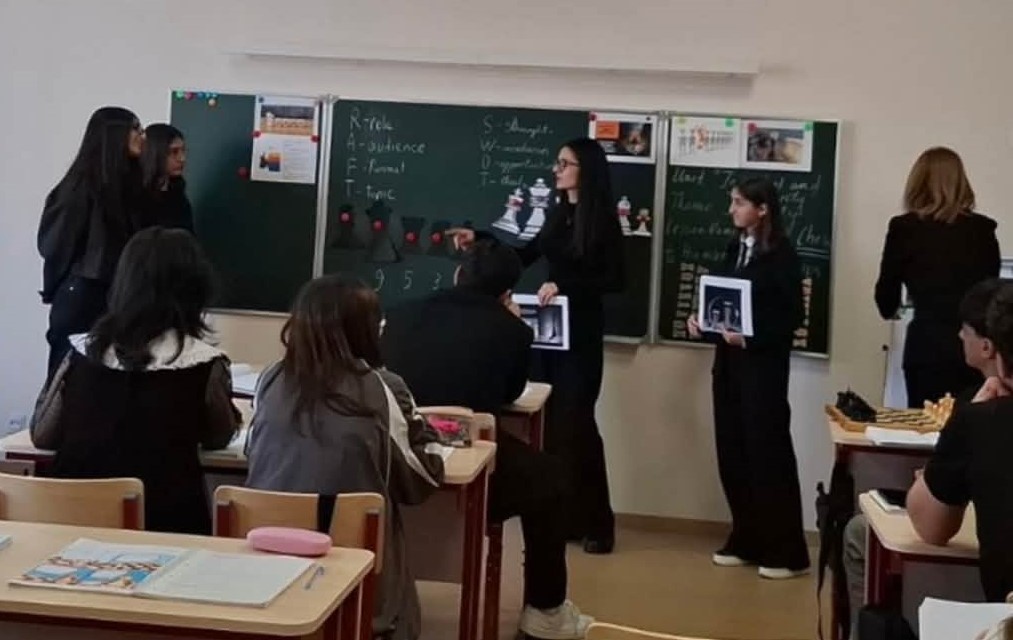
This question became the starting point of an unusual English lesson in Grade 10/1, within the unit “Individual and Society” and its central theme “Identity.”
Instead of beginning with a traditional explanation, we let the queens make the first move. Through their dialogue, our students entered a world where every chess piece has its own identity, strengths, limitations, value, and role.
But the real challenge was to look beyond the chessboard.
Why is the queen so powerful? Does power always mean greater importance? Can a pawn, seemingly the least powerful piece, change its destiny? What happens when pieces cooperate, protect one another, or find themselves in conflict?
Gradually, the chessboard became a reflection of human society. We explored hierarchy, equality, responsibility, loyalty, competition, solidarity, perseverance, and the importance of every individual.
Learning by doing, thinking, and speaking
English was not merely the language of instruction; it was the tool through which students explored and expressed their ideas.
Using the RAFT strategy, they stepped into the roles of chess pieces, addressed their counterparts, and delivered messages with a purpose. Grammar and vocabulary became instruments for communication, argumentation, and creativity rather than isolated rules to memories.
The SWOT analysis offered another perspective, encouraging students to identify strengths, weaknesses, opportunities, and threats. Just as in life, understanding our strengths and limitations can help us make wiser decisions and recognise opportunities for growth.
Most importantly, the lesson created space for students to think critically, justify their opinions, listen to different perspectives, and draw parallels between the game of chess and the complexity of human relationships.
The central message
Every piece has a role, but no piece tells the whole story. Power matters, but so do cooperation, strategy, determination, and the ability to recognize the value of others.
Perhaps the greatest lesson of all is that our position does not define our entire identity. What matters is how we use our potential, respond to challenges, and relate to the people around us.
The final question remains:
What happens to our chess pieces—and could the same happen to us?
Because education is not only about knowing the rules. It is about learning to think beyond them.
Grammar in Action: From Rules to Real-Life Meaning
Grammar was not taught in isolation; it became a meaningful tool for exploring the world of chess and human relationships. Through carefully designed tasks, students practised adjectives and adverbs, degrees of comparison, and present tenses, using them to describe the unique characteristics of chess pieces and compare their roles, power, and mobility.
Grade 10/1
Teacher: Karina Aleksanyan